Restaurant Websites
Private dining SEO: capturing the highest-value restaurant searches
Occasion demand is small in volume and large in value. Here is how to structure private dining content so it is eligible for those searches — and answers the questions an organiser would otherwise email to ask.

Alex Opsenica · Founder, Moolah Media
On this page
If your restaurant ranks well for its own name but disappears when someone searches "private dining Dublin", you have a discovery problem — not a brand problem. The room exists, the menus exist, and the page that would make them findable does not.
Why occasion demand is worth the work
A private dining, group or celebration enquiry is typically worth many times a two-cover walk-in, arrives with a fixed date and a known headcount, and is often booked weeks ahead. The search volume is modest, so it rarely shows up as a priority in keyword tools — which is precisely why competition for it is thinner than for "restaurant near me".
Key takeaway
Judge occasion pages by enquiry value, not by traffic. A page that receives forty visits a month and produces two group bookings outperforms a blog post with a thousand readers.
The searches organisers actually make
- Room and capacity: "private dining room dublin", "restaurant private room for 20"
- Occasion: "christmas party restaurant", "birthday dinner private room", "engagement dinner venue"
- Corporate: "business dinner venue", "corporate lunch private dining"
- Constraint-led: "private dining set menu", "private room minimum spend", "restaurant with function room"
Notice how many of these are constraints rather than cuisine. The organiser has already decided roughly what kind of evening it is; they are now filtering on capacity, budget and availability. A page that hides those details forces them to email — and most will email a competitor who published them instead.
What a private dining page should contain
Private dining page essentials
- The room named, with seated and standing capacity
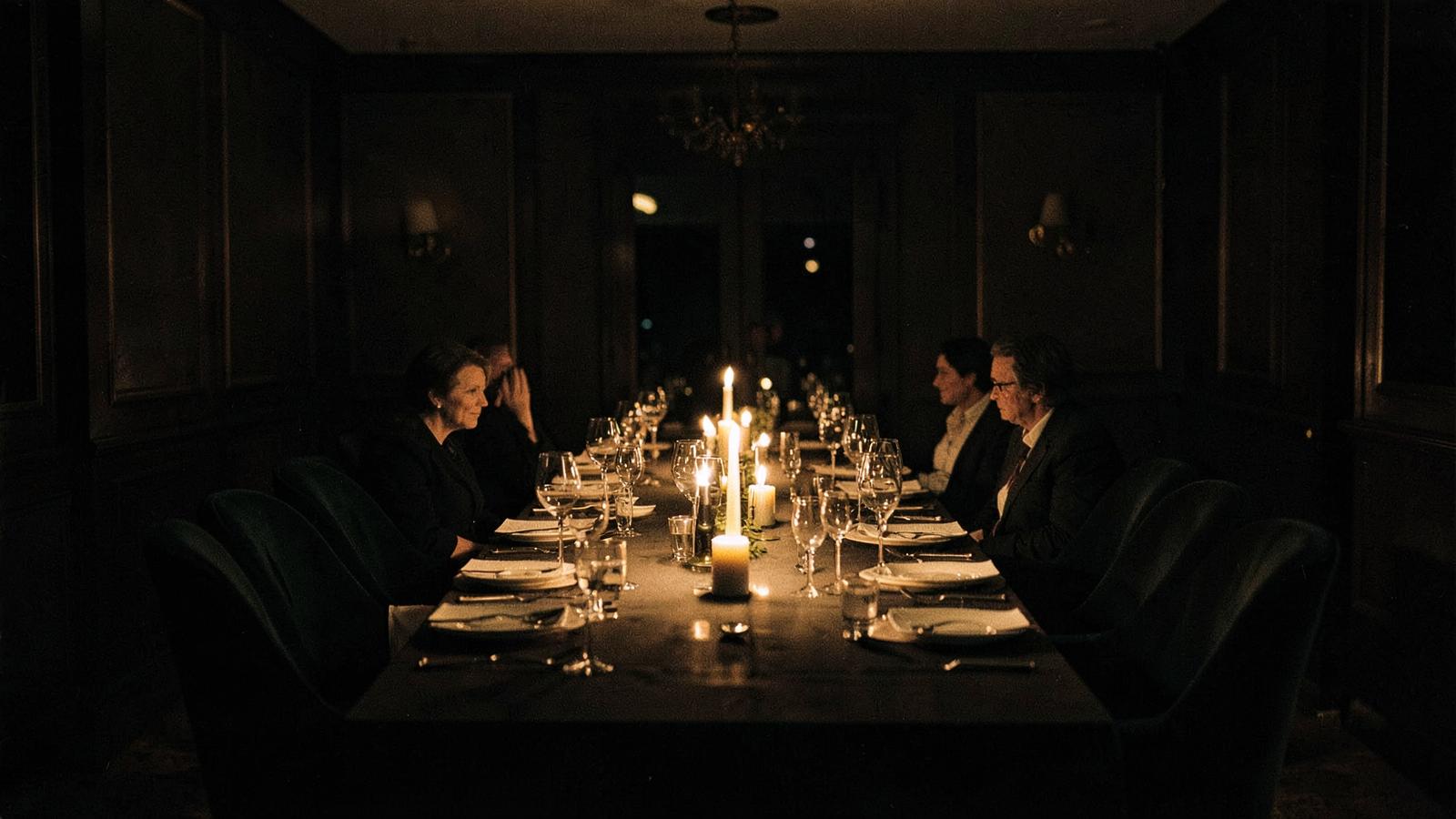
- Photographs of the actual room, laid for service
- Set menus and price per head, or a clearly stated price band
- Minimum spend and any hire fee, with the conditions
- Which days and times the room is available
- Accessibility, AV, and whether the space is genuinely private or partially screened
- A short enquiry form asking date, headcount and occasion — not a generic contact form
- A named contact and a realistic response time
Worth avoiding
Withholding price to "start a conversation" reliably reduces enquiries for group bookings. Organisers are usually working to a budget set by someone else and will exclude any venue they cannot cost.
One page per genuine offer
Create a page where a distinct offer exists: a private room, a group set menu, a Christmas package, a wedding-party lunch. Do not create a page per keyword variation. Six near-identical pages differing only in the occasion word compete with each other and read as thin to both guests and search engines.
Example · hypothetical
A hypothetical restaurant with one room and three offers
A restaurant with a single twenty-four-seat room might reasonably publish one private dining page covering the room, capacities and set menus, plus one seasonal Christmas page live from September to January that links back to it. That is two pages doing real work — not eight pages saying the same thing with different headings.
Seasonal pages: keep them, don't delete them
Christmas and other seasonal pages accumulate value across years. Keep the same URL, update the menus, dates and prices each season, and leave the page live year-round rather than deleting and rebuilding it. Deleting it each January discards whatever authority it had earned.
Supporting signals outside the website
- Business Profile attributes and services that reflect group and private dining where accurate
- A Business Profile post during the booking window for that occasion
- Menus and capacity details consistent everywhere they appear, including booking platforms
- Photographs of the private space in the profile gallery, not only on the website
Measuring it properly
Track enquiry form submissions and the specific phone number or email used on the page, plus impressions and clicks for the page in Search Console. Then ask the front of house team to record enquiry source and value, because the commercial result — booked covers and spend per head — never appears in an analytics tool.
See this in practice
How a restaurant search actually becomes a booking.
Chef-led landmark restaurant · name withheld · Dublin city centre
766KProfile views · recorded in Google Business Profile Insights
766K profile views, 75% of them on Maps Mobile, and 19,600+ direction requests — mapped across five stages of guest discovery.
See how discovery translated into enquiries in a real engagementSee this in practice
706,000 impressions — and the reservation page that leaks them.
Premium steakhouse group · name withheld · Dublin 2
706KSearch impressions · recorded in Google Search Console
The full funnel from impression to action, including a reservation page served 124,501 times at a 1.15% click-through rate.
See what a low page-level click-through rate looks like in real dataSource: Google Search Central — SEO Starter Guide — Why a dedicated, descriptive page beats a paragraph buried on another page.
Common questions
We only have a semi-private area, not a room. Is a page still worth it?
Yes, if you describe it accurately. State that the space is screened rather than fully private, give the capacity and the conditions. Organisers filter on facts; being clear costs you the bookings that would have gone wrong anyway.
Should the private dining page sit in the main navigation?
It should be reachable in one click from the menu or bookings area. Pages buried three levels down are found by neither organisers nor search engines.
How far ahead should a Christmas page go live?
Corporate organisers commonly start searching in late summer. Having the page updated and live by early September is more useful than a beautifully designed page published in November.
Working on this yourself? Website and occasion page work.
Is your website helping or quietly getting in the way?
The audit reviews menu accessibility, location content, structured data and mobile performance, and separates search issues from booking friction.
Get Your Free Visibility AuditWritten by
Alex Opsenica
Founder, Moolah Media
Founder of Moolah Media, a founder-led restaurant marketing specialist based in Ireland, working with restaurants worldwide on websites, SEO and Google Maps, and Google Ads. Around 20 years in hospitality, including hands-on restaurant management.
Continue exploring

Restaurant Websites
What every restaurant website needs for search
The website fundamentals that affect restaurant discovery and booking: readable menus, location content, schema and mobile speed.
3 min readPublished 25 Nov 2025
Read Insight
Restaurant SEO
Restaurant SEO: what actually matters for getting found
A restaurant SEO decision guide: fix discovery, menu and booking leaks, prioritise the first month and measure outcomes without inflated ranking claims.
7 min readUpdated 5 Oct 2026
Read Insight
Measurement
Which SEO metrics actually matter to a restaurant?
Search Console, Business Profile Performance, GA4 and booking data: what each proves, and which numbers are worth reporting.
3 min readUpdated 13 Jan 2026
Read Insight